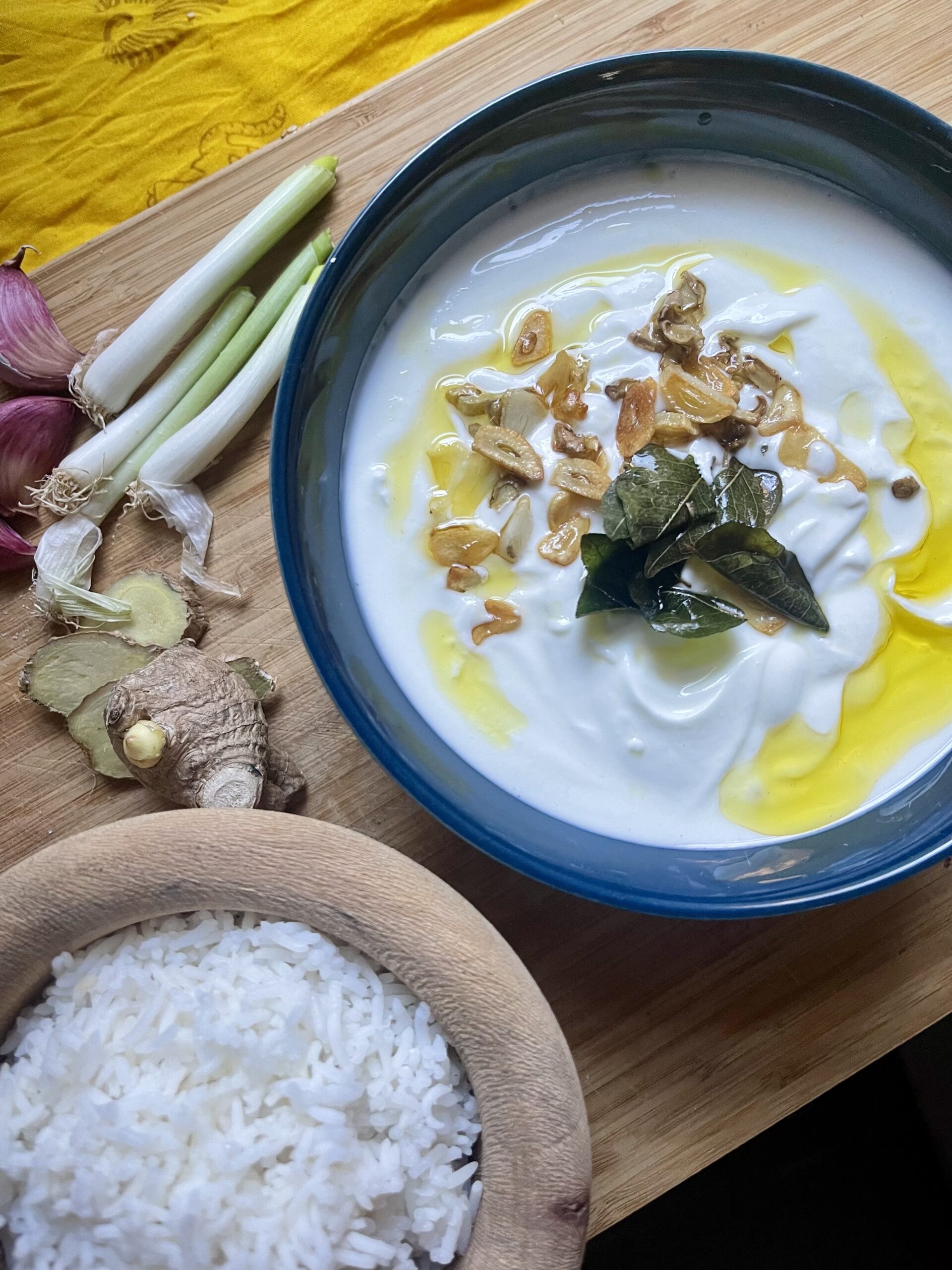
I used to call this recipe my mom’s 3-ingredient curry leaf raita. Which I realize is a little misleading. The raita itself is made with yogurt, oil and salt, but the flavour comes from just three aromatics: fresh curry leaves, ginger and garlic.Gently sautéed in olive oil, they infuse the oil with an incredible fragrance before being stirred into cool, tangy yogurt.
These three aromatics do the heavy lifting in this dish — and in much of South Indian cooking, I dare say.
In this dish, the result of these three ingredients is creamy, tangy, garlicky and wonderfully aromatic. It’s the kind of dip that has people double-dipping and asking you for the recipe.
My Mom’s Curry Leaf Raita
If you’re familiar with Indian cooking, you might be wondering why I’m using olive oil here.
Feel free to swap it for coconut oil if you’d like a more traditional South Indian flavour, or sunflower oil if you want something neutral and inexpensive.
But this particular version is very much a family classic.
My mom learned to make this raita from a family friend and brilliant home cook more than 30 years ago in Thiruvananthapuram, the capital of the South Indian state of Kerala. The recipe travelled the long way back with her to Germany, chosen from among the many recipes she learned because of its simplicity and distinctive flavour.
Over the years, the coconut oil was replaced with olive oil. My mother has always had a passion for Italian cooking and, naturally, that passion found its way into everything she cooked — yes, even Indian food. She was also the kind of person who liked to add a bird’s eye chilli to all her Italian dishes.
This is the version I grew up eating.
So this isn’t meant to be a definitive or traditional South Indian raita. It’s our family’s version: a South Indian dipping yogurt adapted to the ingredients and staples of an Italian-inspired kitchen in Germany.
Why This Curry Leaf Raita Works
One of the things I love about curry leaves is that their flavour is so distinctive, yet somehow incredibly approachable. Even people who wrinkle their noses at cumin or curry often love the fragrance of freshly fried curry leaves.
That’s why I think this is such a lovely gateway into Indian cooking.
It’s also a brilliant thing to bring to a potluck or BBQ. Serve it alongside grilled meat, vegetables or flatbreads, spoon it over dal, or use it as a dip for something completely unexpected — I’ve even been known to put it next to tacos.
It stands on its own, but it’s also one of those little additions that can make an entire spread more interesting.
I’m a fan. Can you tell?
Three Aromatics, Big Flavor
It’s so easy! It’s one of those recipes that you can freestyle once you’ve made it a few times. The basic concept is this:
3 flavouring ingredients: ginger + garlic + curry leaves
Base: yogurt + oil + salt
Minimal ingredients pack max flavor. Three ingredients do the heavy lifting on this simple dish. And the best thing is: you can serve it to almost anyone including kids.
Can Kids eat Curry Leaf Raita?
One of the reasons this recipe is such a well loved classic, is that even a picky eater may try this. This the recipe that my mom served friends of mine who would come over and be very skeptical about eating Indian food. The idea of mixing rice with yogurt was anathema to some of my preschool friends with Western palates. Yogurt was desert and not meant to be mixed with rice, of all things! Yet the combination of flavored and yogurt and rice with a little bit of dal won over even the pickiest of eaters – especially since they were allowed to eat Indian food with their hands!
I respect my mother now for enduring the mess that this must have entailed. And as a mother myself I value how the tried and true combination of curd and rice has won over many a children’s palates. If you have an eater with a very sensitive palate to please try just combining plain yogurt with a tiny pinch of salt or sugar together with plain white rice. This combination may be a good entry into the texture of rice and yogurt for a less adventurous child or adult.
Yogurt cools even the spiciest dish
The appeal of yogurt as a balancer for more bold flavors is not limited to kids. Yogurt naturally balances the spice of chili, or more pungent flavors that those who are not used eating South Asian spiced food might find difficult to stomach. If you’ve ever started sweating or tearing up because of the spice in a dish, have a spoon of yogurt. This is why this spiced yogurt is such a staple for all Indian spreads I make. It’s a condiment and a side dish but also a last resort for those who’ve overestimated themselves with the level of spice on their plate.
Tips for Making Curry Leaf Raita
Use fresh curry leaves and freeze them immediately. The non-negotiable ingredient in this recipe is the fresh curry leaves. You can’t substitute them without losing the characteristic flavor. I have friends who regularly make hour long trips to a specialty Indian grocer to source a large bunch. The best way to operate is to buy a big bunch of fresh leaves and immediately freeze them when you reach home. The leaves freeze well and you can pick off two to three small leaves for every time you’re making this dish. It makes this yogurt almost a pantry classic.
Don’t let the garlic burn. In this dish, garlic is sautéed in oil. I’ve often prepared this dish mindlessly and discovered the garlic had burnt. Discard the burnt garlic and oil and start over. Burnt garlic will taste bitter and seep through the whole curry.
Which Yogurt Should You Use?
For this raita, I always use full-fat natural yogurt. It has a slightly grainy, loose texture that works particularly well here because the oil helps transform it into something wonderfully creamy.
Once the tempered oil is stirred through, the texture becomes much smoother. So although I use full-fat yogurt, I don’t actually want a yogurt that is already very thick and creamy.
Greek yogurt doesn’t work well for this raita. It’s too thick and dense to begin with, and you lose that lovely contrast between the natural yogurt and the oil. The finished raita can feel heavy rather than light and spoonable.
I’d also avoid low-fat or fat-free yogurt. Apart from the texture, the flavour just isn’t as good. This is a very simple recipe with only a few ingredients, and the richness of full-fat yogurt makes a noticeable difference. Low-fat yogurt tends to taste thinner and more watery, whereas the full-fat natural yogurt gives you that rounded, creamy flavour once the oil is mixed through.
So look for a plain, unsweetened, full-fat natural yogurt — ideally one that has a slightly grainy, natural texture. The magic happens when the oil is mixed in.
How to Buy and Store Curry Leaves
Curry leaves are the unchallenged star of this recipe, with a taste so unique that it’s irreplaceable. If the curry leaf is new to you and your cooking, fear not – it’s more versatile and easy to handle than you might think.
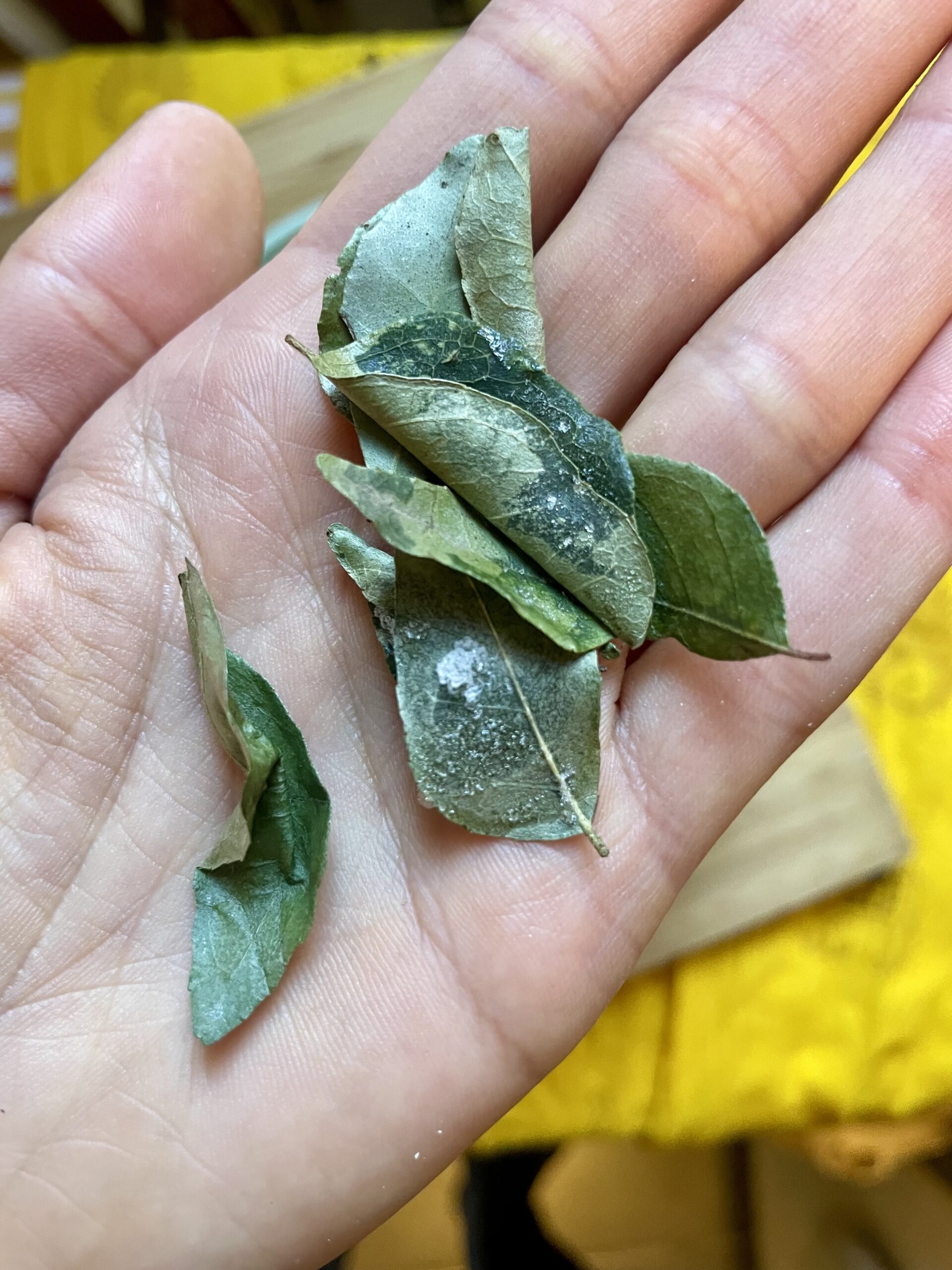
I highly recommend buying them fresh, they are usually kept in the fridge at the grocers, and immediately freezing them at home. Due to their strong pungent taste, you only really need two or three per dish, which means a bunch of curry leaves can go a long way. The freezer keeps them fresh almost indefinitely. If you want to cook with frozen curry leaves, I add them to hot oil immediately after taking them out of the freezer. No need to defrost the delicate leaves. This is convenient and allows you to use just as much as you need.
How to Use Curry Leaves
Curry leaves enhance the taste of everything they touch: South Indian soups like rasam and sambar, lentil dishes, chutneys, and appetizers like samosas. But rather than cooking special dishes to use up the big bunch of curry leaves you bought, add them to your everyday staples to make a basic meal tastier. One of the most simple and delicious combinations I’ve tasted is my friend Pragyas Curry Leaf Omelette or her husbands’ Curry Leaf Bratkartoffeln (German fried Potatoes).
Curry leaves are commonly used in the initial stages of cooking. When using curry leaves, incorporate them at the beginning of the cooking process. Detach each leaf from its stem and sautee in hot oil to release essential oils, infusing your dishes with a burst of flavor. Fried with vegetable oil and aromatics such as garlic and onions, they lend a unique flavor to South Indian dishes.
What to Serve with Curry Leaf Raita
Now that you know that curry leaves can be added to virtually everything savory, let’s look at how to pair this dipping yogurt specifically. My Moms Curry Leaf Raita works well as a side dish or condiment – it shines, when in combination with other bold tastes. It’s especially well suited to cut the heat of spicy curries. And you can’t go wrong pairing this with this no-tomato dal or this everyday dal. And of course it’s also a great addition to this saag paneer. But as I’ve mentioned earlier, this Raita is so versatile you can branch out and add it to non-traditional foods such as grilled meats and tacos.
Serve it with:
- dal and rice
- biryani or pulao
- spicy curries
- grilled chicken
- roasted vegetables
- naan or roti
- kebabs
- tacos
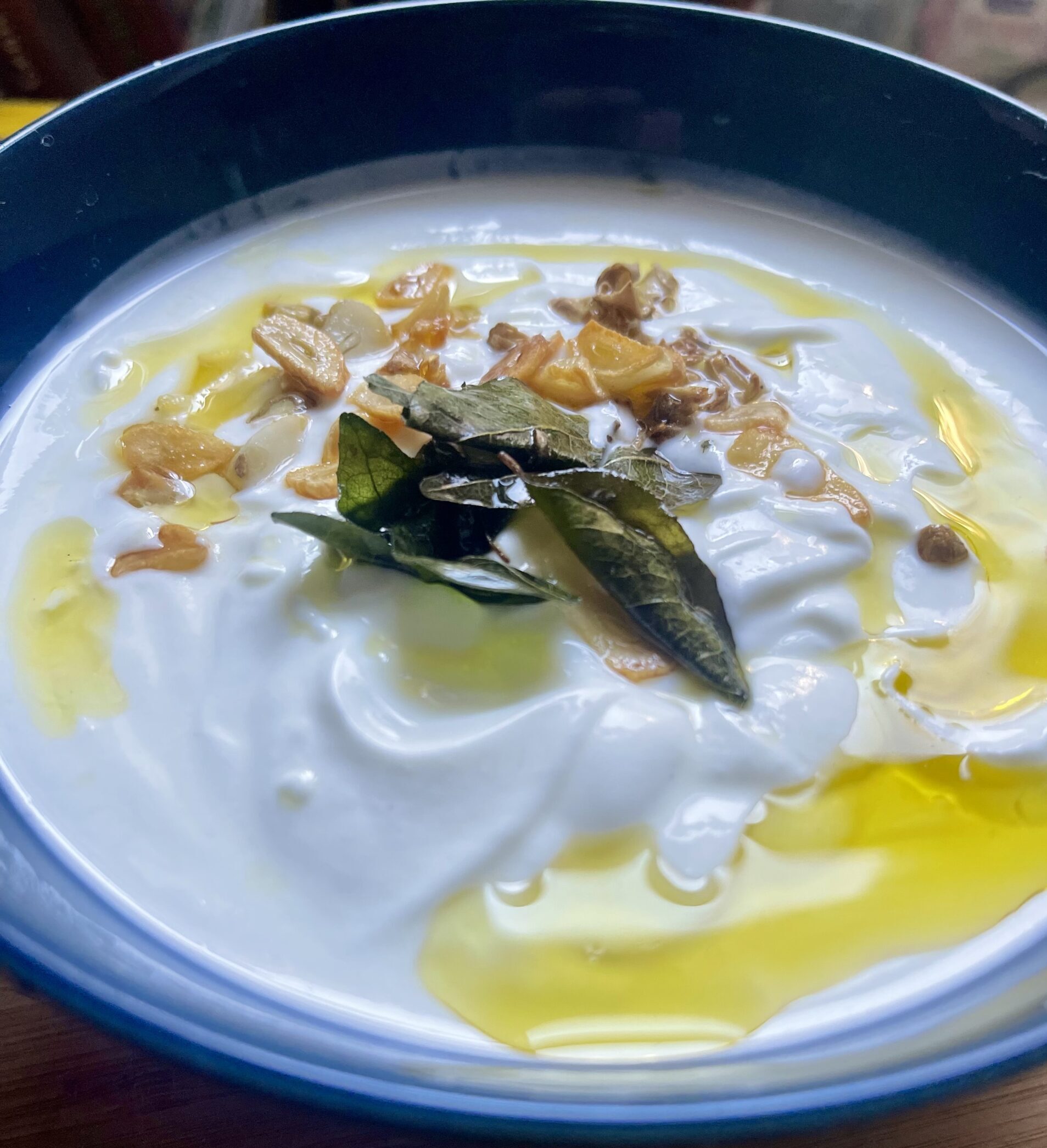
How to make Curry Leaf Raita (South Indian Yogurt Dip)
Ingredients
2-3 fresh curry leaves – Access to fresh curry leaves can be tricky. Usually, South Asian grocers carry fresh curry leaves. I freeze them right after purchase. This is perfect for portioning.
2 cloves garlic, preferably fresh
1 knob of ginger, about the size of your thumbnail
Full fat yogurt – I prefer a mild full fat yogurt. If you have Greek yogurt on hand, add a little water to make it less stiff.
Pantry Items
Good quality olive oil – I love using high quality extra virgin olive oil in this recipe. It’s far from usual for South Indian cuisine, but I love the taste of good olive oil in this dish. Substitute with peanut oil or sunflower oil for a neutral alternative. Use coconut oil if you’re going for a more authentic taste.
Salt to taste – You might not think so, but the salt is really important to really bring the flavors together, don’t skimp!
Instructions
- Gently heat a generous amount of olive oil in a skillet or pan on low to medium heat.
- Meanwhile, slice or dice the garlic cloves and dice the ginger.
- Take out 2-3 fresh curry leaves from the freezer or the fridge.
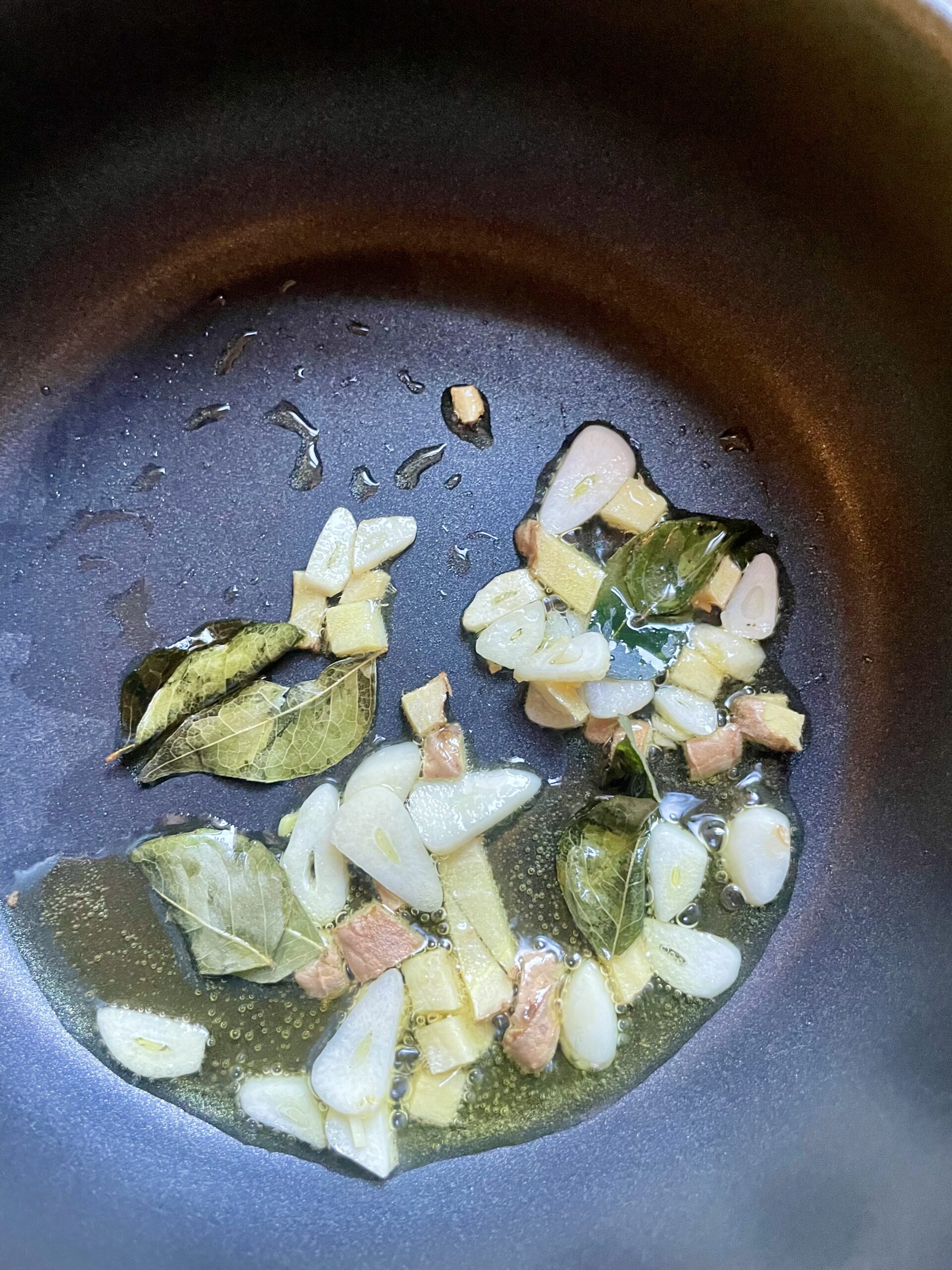
- Add the curry leaves, garlic and ginger to the warm olive oil and sauté until fragrant.
- Immediately remove the pan from the heat before the garlic burns.
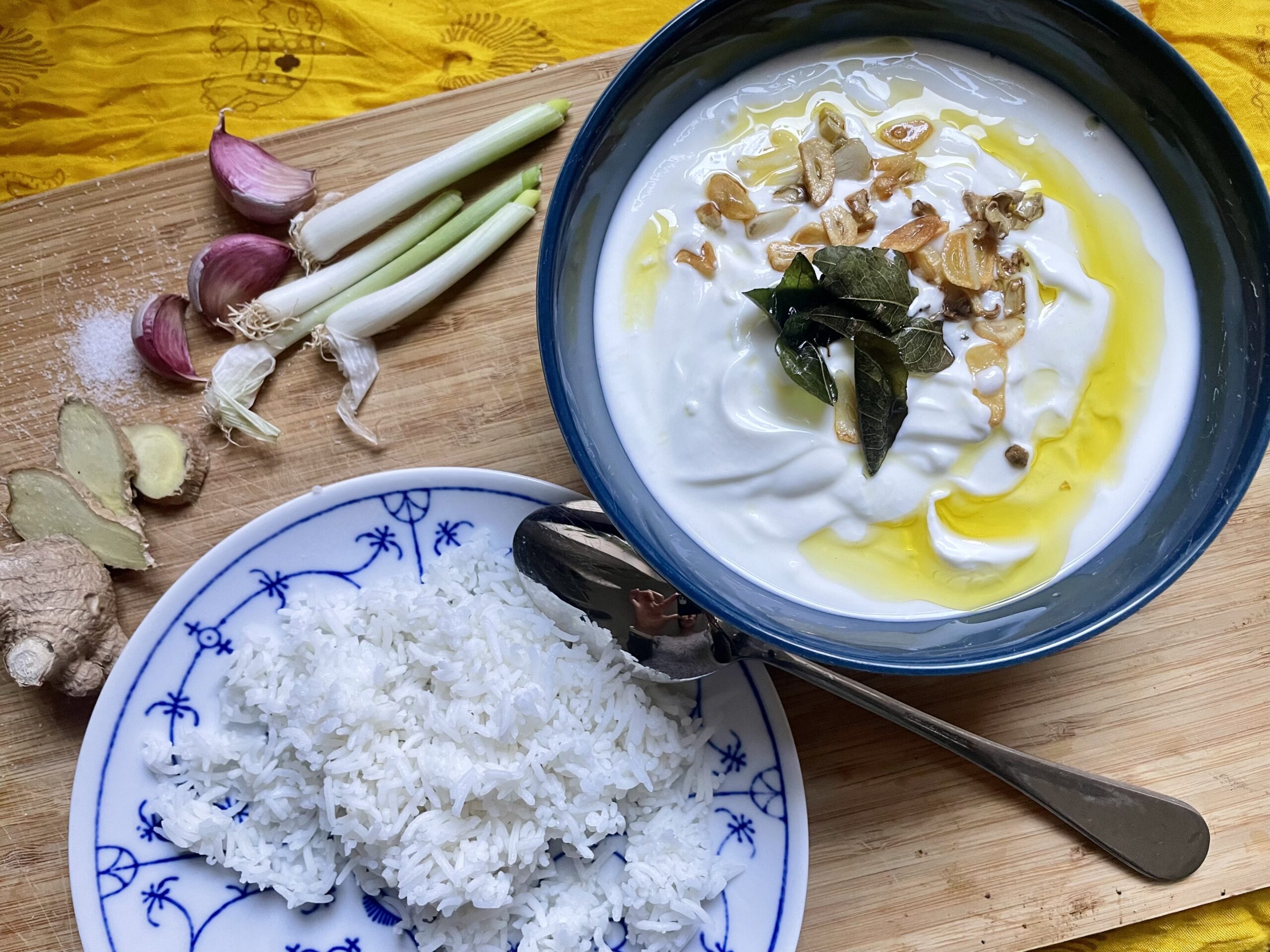
- Add the cold yogurt to the curry, it will warm a bit in the process, which is the intended result.
- Mix well and serve immediately with rice, roti, chapati, naan and or dal.
How to store Curry Leaf Raita
This dish stores well in the fridge, the flavors steep through. Do not store at room temperature, as the liquid and fat in the yogurt will separate. Make sure to cover the dish when storing in the fridge, otherwise the yogurt takes on fridge smells.
Can I make this Curry Leaf Raita vegan?
To make this recipe plant-based, use coconut or almond yogurt. Coconut yogurt works particularly well here because its richness works nicely with the infused oil. I would not recommend oat-based yogurt because it usually doesn’t have enough fat content to create a creamy consistency.
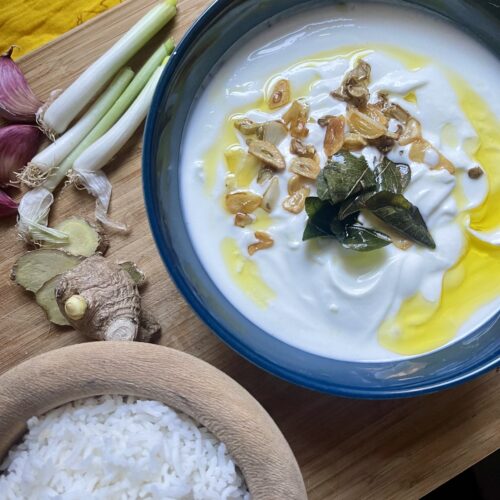
Curry Leaf Raita (South Indian Yogurt Dip)
Equipment
- 1 Skillet or non-stick frying pan A medium or small skillet will do
- 1 Bowl For serving
Ingredients
- 500 gram Full Fat Yogurt
- 2-3 Curry leaves Access to fresh curry leaves can be tricky. Usually, South Asian grocers carry fresh curry leaves. I freeze them right after purchase. This is perfect for portioning.
- 2 cloves Garlic Preferably fresh
- 1 knob Ginger
Pantry Items
- 1 tbspn olive oil If you can use good quality here, it makes a difference to the taste.
- 1 pinch of salt
Instructions
- Gently heat a generous amount of olive oil in a skillet or pan on low to medium heat.
- Meanwhile, slice or dice the garlic cloves and ginger.
- Take out 2-3 fresh curry leaves from the freezer or the fridge.
- Add the curry leaves, garlic and ginger to the warm olive oil and sauté until fragrant.
- Immediately remove the pan from the heat before the garlic burns.
- Add the cold yoghurt to the curry, it will warm a bit in the process, which is the intended result.
- Mix well and serve immediately with rice, roti, chapati, naan and or dal.